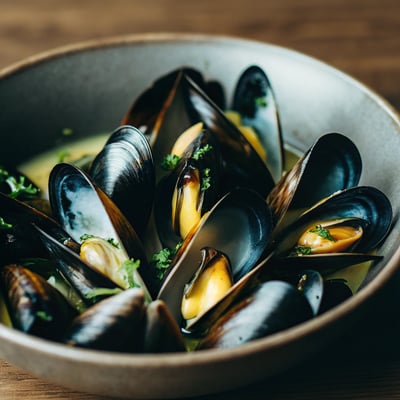
Steamed Mussels in Garlicky Wine Broth
Total Time
35 Minutes
Prep Time
15 Minutes
Cook Time
20 Minutes
Rating
4.92 out of 5 stars
(25)
Ingredients
2-4 servings
- 3 tablespoons extra-virgin olive oil
- 4 large garlic cloves, minced
- Pinch red pepper flakes
- 1½ cups dry white wine (e.g., Sauvignon Blanc, Pinot Grigio, or unoaked Chardonnay)
- 4 sprigs fresh thyme
- 2 bay leaves
- Brimming ¼ teaspoon salt
- 4 pounds mussels, scrubbed and debearded
- 5 tablespoons unsalted butter, cut into 5 pieces
- 3 tablespoons finely chopped fresh Italian parsley
- Crusty bread, for serving
How would you rate this recipe?
Preparation
Step 1
Set an oven rack in the lowest position and preheat the oven to 500°F.
Step 2
Set a large roasting pan on the stovetop over medium heat. Add the oil, garlic, and red pepper flakes and cook, stirring constantly, until fragrant, 30 to 60 seconds. Do not brown.
Step 3
Add the wine, thyme, and bay leaves and boil until slightly reduced, about 1 minute.
Step 4
Stir in the salt and mussels. Cover the pan tightly with aluminum foil and transfer to the oven. Roast until the majority of the mussels have opened, about 15 minutes.
Step 5
Remove the pan from the oven, and place a dishtowel over the handle to remind yourself that it's hot. Discard any unopened mussels.
Step 6
Using a wooden spoon, push the mussels to the edges of the pan. Add the butter to the center and stir until melted.
Step 7
Discard the thyme sprigs and bay leaves and stir in the parsley.
Step 8
Spoon the mussels and wine broth into bowls and serve with bread.
Step 9
Save recipe for the next time?
Chef's notes
When a recipe calls for dry white wine, the best options are Sauvignon Blanc, Pinot Grigio, or unoaked Chardonnay. Select a bottle that is inexpensive but still good enough to drink.
Most markets sell farm-raised mussels, which are easy to clean — in fact, they are usually already scrubbed and debearded. However, it’s still a good idea to clean them prior to cooking. Simply put them in a colander and run them under cold running water, using your hands or a scrubbing brush to remove any sand or debris. If beards are present, cut or scrape them off with a paring knife, or use your fingers to pull them sharply down toward the hinged point of the shells.
The mussels should be tightly closed. If you see a mussel that is open, tap it gently against the counter; in a live mussel, this will trigger a reaction to close its shell. If the mussel doesn’t slowly close, it has died and should be discarded. Discard any mussels with cracked shells as well.