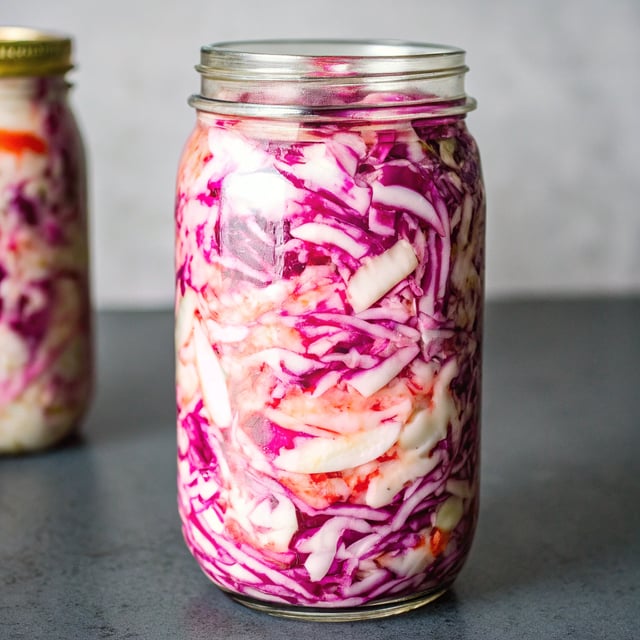
Beet Kvass Recipe
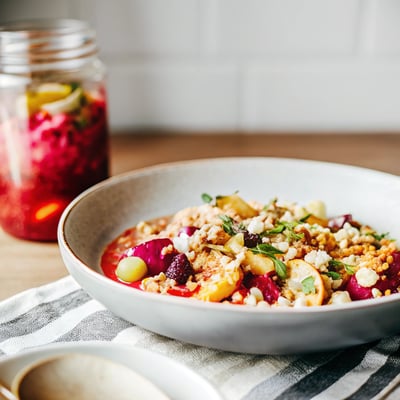
Total Time
15 minutes
Prep Time
15 minutes
Rating
4.8 out of 5 stars
(21)
Ingredients
1 serving
- 2 medium beets, organic (see notes for doubling, recommended) 2 cups diced, skin ON.
- 3 cups filtered water (tap water may have too much chlorine & inhibit fermentation)
- 1 heaping tablespoon fine sea salt
- ¼ cup fermented pickle brine or fermented kraut brine, or 1-2 tablespoons whey (liquid from strained yogurt)
- fresh dill (or fennel fronds), bay leaves, or other herbs.
- pickling spices ( fennel seed, coriander seed, dill seed, peppercorns, celery seeds, caraway, etc.) Tip: to prevent them from floating, either add them to the jar first, place beets over the top, or place a small mesh bag. Remove any that float to the surface.
- sliced onion or shallots
- fresh garlic cloves
- fresh sliced ginger or turmeric root.
How would you rate this recipe?
Preparation
Step 1
Prep
Step 2
Rinse and slice the beets into ¼-inch thick rounds, then dice them, leaving the skin on. You want that bacteria from the skin, so don’t peel! Get a clean, 1-quart mason jar.
Step 3
Assemble
Step 4
If adding any whole spices, add these to the jar first, then add garlic, onion or dill if using. Add all the beets overtop. If adding whey, kraut brine or pickle brine, add this now.
Step 5
Make the brine
Step 6
Mix 3 cups water with 1 heaping tablespoon sea salt. Pour this into the jar, leaving an inch of headroom at the top. If you need more brine: the ratio is 1 heaping teaspoon of salt, per 1 cup of water. Mix it first, then add. The salt will kill the harmful bacteria, but allow the healthy lactobacilli to flourish.
Step 7
Remove any spices or seeds that float to the top. Anything that touches the surface can mold. I check daily for floaters! Cover with a loose-fitting lid. Place in a bowl or baking dish (to collect any overflow- a sign of fermentation!).
Step 8
Ferment
Step 9
Place the jar in a cool, dark place 60F-65 F is ideal. Check every couple days, removing seeds if need be. If you added whey or brine, you should see some action within 5-7 days. If not, it can take up to 2 weeks before you notice some slight bubbling when you tap the jar, indicating that it is fermenting. The longer it ferments, the more tangy it will taste, so you can ferment “to taste.” For an even tangier flavor, continue fermenting for 1-2 more weeks. Once happy with the flavor, refrigerate.
Step 10
Refrigerate
Step 11
(either strain, or leave beets in- I leave mine in). It will continue to ferment in the fridge, but at a much slower rate, developing more depth of flavor. The sugar from the beets will continue to feed the healthy bacteria.
Step 12
If you notice any white foam on top of your kvass it is most likely kahm yeast and harmless. Skim it off with a spoon and toss. If you see mold, I would discard the batch.
Step 13
Store this in the fridge, strain into a cup, and drink a few ounces daily. Yes, you can eat the beets!
Step 14
Save recipe for the next time?