How to Naturally Dye Easter Eggs with Superfood Powders
Total Time
3 hours 40 minutes
Prep Time
10 minutes
Cook Time
30 minutes
Rating
5 out of 5 stars
(3)
Ingredients
2-3 dozen eggs
- Superfood Powders:
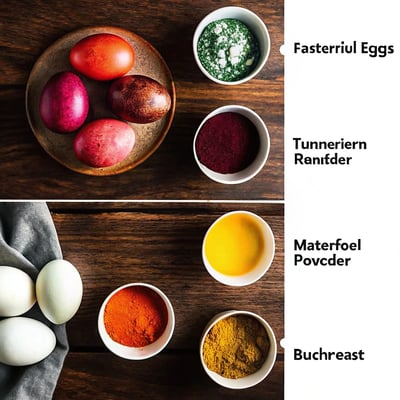
- Beet Powder
- Turmeric Powder
- Hard-boiled white eggs
- White or apple cider vinegar
- Water
- Assorted nature finds (leaves, flowers, feathers, etc.)
How would you rate this recipe?
Preparation
Step 1
Hard boil white eggs; let cool.
Step 2
Make your natural dyes; let cool. See below for further instruction.
Step 3
Gather some beautiful leaves, flowers, herbs, stems, feathers or any nature finds you think would make nice prints for your eggs.
Step 4
Place one nature find on top of one egg, press with one finger as you gently wrap, cover and tie a cheesecloth around the egg, securing the nature find. Repeat with remaining eggs.
Step 5
Place your cheesecloth covered eggs or plain eggs into your natural dyes.
Step 6
Let them sit until the desired intensity of color is achieved (I find 3-6 hours to be the sweet spot!).
Step 7
Let the eggs dry on a baking rack, unwrap, and enjoy!
Step 8
How to Make Natural Dye with Beet Powder:
Step 9
Bring 6 cups of water to boil in a large pot.
Step 10
Stir in 3 tablespoons vinegar.
Step 11
Stir in 3 tablespoons beet powder.
Step 12
Turn off heat and let cool completely before adding eggs.
Step 13
How to Make Natural Dye with Turmeric Powder:
Step 14
Bring 6 cups of water to a boil in a large pot.
Step 15
Stir in 2 1/2 tablespoons vinegar.
Step 16
Stir in 2 tablespoons turmeric powder.
Step 17
Turn off heat.
Step 18
Let cool completely before adding eggs.
Step 19
Save recipe for the next time?
Chef's notes
Please refer to the post above for tips and tricks.
Have fun experimenting!
You can add more or less of superfood powders to the dye bath dependent upon how subtle, or intense a color you are trying to achieve.
Do not have cheesecloth? Try using a section pantyhose or any old rag or torn cloth you can find. You can use rubber bands to secure if need be.
Experiment with soaking times for different intensities of color, too.
White eggs work best for soaking up and displaying natural dyes, but feel free to experiment with other eggs.
You can also wrap eggs with unique, deeply textured cloths and fabrics for another fun print variation.
The vinegar helps the dye stick to the eggs, but in a pinch, if you are out, you can omit the vinegar. Just be certain to soak longer.